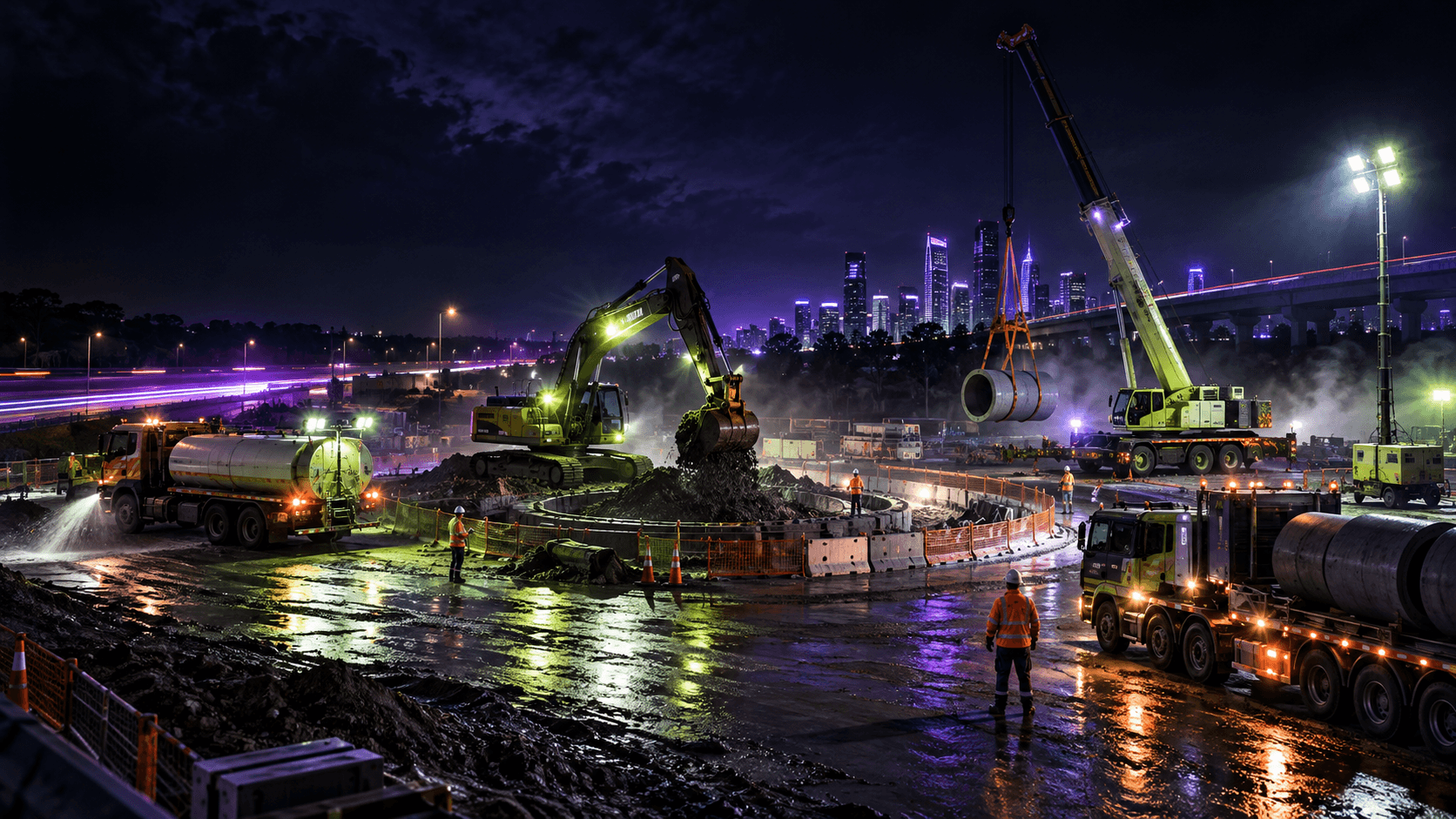
Night works are a service system, not a lighting problem.
A night shift changes visibility, fatigue, deliveries, supervision and community impact. Treat those changes as a connected operating plan.
Light the decision points
Prioritise travel paths, loading zones, lifting areas, edges and inspection points. More light is not automatically better when glare and shadow obscure movement.
Design the changeover
Brief handover, refuelling, maintenance and operator transitions as carefully as production. The quiet minutes between shifts often decide the next one.
Plan for the neighbourhood
Noise, reversing alarms, light spill and truck routes can shape the workable window. Share constraints with suppliers before equipment is allocated.